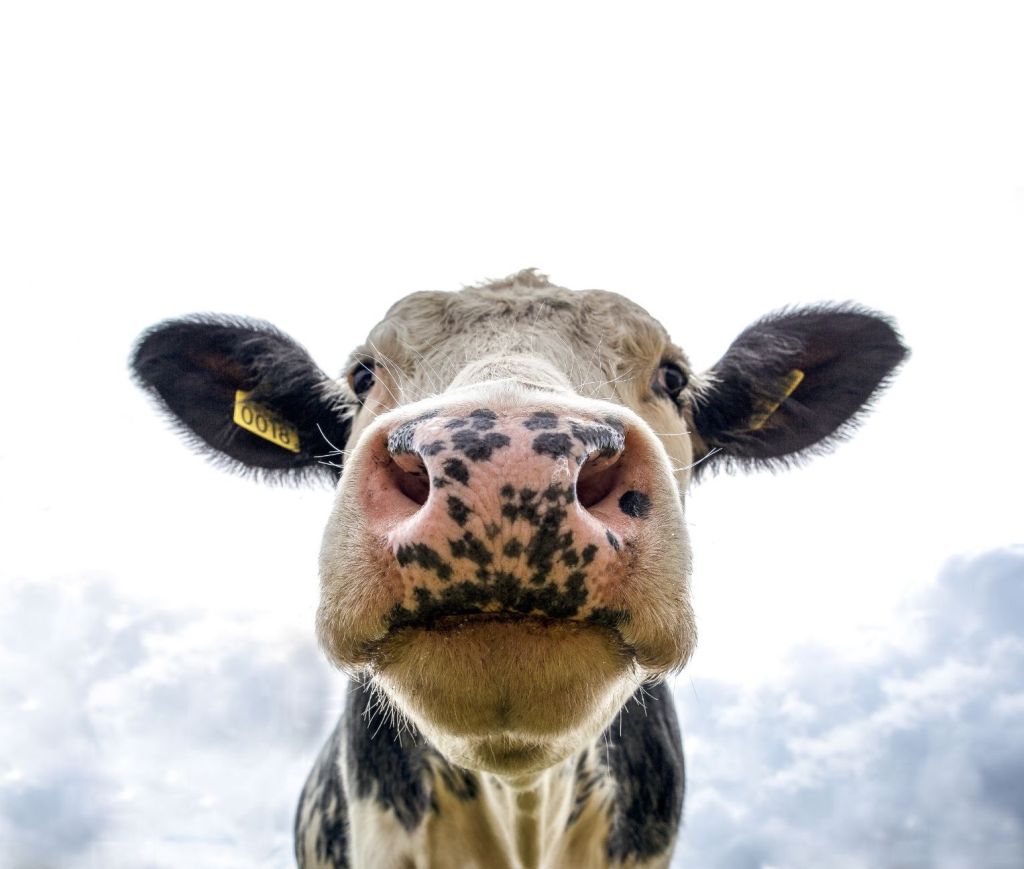
Last night we went to a friend’s birthday party. I was in a conversation with this guy and he mentions that he had been bailing hay earlier. Being a transplant from Wisconsin, there are strange things that you miss when you live in Alaska, kind of like a slice of cheesecake while on a diet. Strangely, theatrical thunder and lighting storms and seeing cows grazing in a field are a few of those things. So, I quickly imposed that he might consider letting me visit his farm.
Everything we eat has a story to tell, a process that involves many hours of laboring, people who have a rich history of farming deep in their veins, truck drivers, and factory workers, middle men and store employees unloading boxes and stocking shelves. It has been on a journey, and will hopefully end up serving an important purpose, perhaps as the flavorful spotlight or an accompaniment. While I might still partake in the gratification of convenience to feed myself and my family, I often consider this. That is one of the reasons why I get excited about seeing a cow. It’s a reminder of not only the process, but unearths a timeless love story in which blood, sweat, and tears have spilled over.
I had a vulnerable moment with some cows once. No really! I am a small town Wisconsin girl, but i grew up in the heart of our little village, where we got our 2% low-fat milk in a plastic jug at the grocery store. I drank a lot of milk, but I took each glass for granted. Sure it came from a cow, but I had no connection to it as I gulped it down each day. When I was invited for a sleepover out at my classmate’s farm I gained a whole different perspective. We went into the barn, careful to stay within the center of a narrow cement slab that went down a long row of cow rumps. A trough ran along the the edge of the cement slab, used to collect manure when it was expressed from the cows, to be used later in the fields. I was hyperventilating a lot, this was a very foreign image for me. I made sure to walk exactly down the middle and not veer too close to either side. Next to each cow was a milking station that would be applied to the utters when they were ready for their next milking. The stench of ripe manure, sounds of cows baying in different baritones, and the methodical rhythm fully engulfed my senses, holding me captive to the cow’s experience to supply our gallon of 2% low-fat milk.
Learning about how we get milk didn’t end in the barn. When my friend and I got up for breakfast the next morning, we were greeted by toast and jam, cereal, and a glass pitcher with white liquid. Looking at the pitcher gave me a weird feeling, like something was out of whack in the universe, a ripple had occurred somewhere in another galaxy. I immediately identified it as milk, but it was all wrong in my mind. The glass pitcher sat there, separated by a thin line where the fat had risen to the top and escaped from the remaining watery mucus. My friend carelessly grabbed the pitcher and poured the mixture over her cereal. I asked in the most naive way what it was and she confirmed, “it’s milk, from the bulk tank.” That morning I had toast and jam with juice. It’s a funny thing what packaging, media, and our experiences teach us about food. So when you ask “What is so exciting about seeing a cow?” I am reminded that passing by a farm, surrounded by rolling fields speckled with cattle reminds us that a whole process took place in order to get that glass of milk or the juicy steak flopped on our plate, and understanding where our food comes from really gives us a richer connection to it.

 4 Feet on the Road